My next book, Productiveness, arrives this September. It's about the difference between doing more and doing what matters, and how we lost the ability to tell them apart. I'll send the release date the day it's set. Visit https://mikevardy.com/productiveness to learn more. Logic is beautiful and it's also almost never enough. That's the tension running through this entire conversation — the idea that we want our decisions to be purely logical because it's simple and concrete, but almost no real situation in a human life actually has the structure logic requires. I've believed for a long time that reason lives somewhere in the nuanced middle between logic and emotion, and I wanted to sit down with someone who's spent a career studying exactly that boundary.
Tom Griffiths is a Princeton professor and the author of the new book
The Laws of Thought: The Quest for a Mathematical Theory of the Mind. If you know his earlier book,
Algorithms to Live By, this one is the foundation underneath it — the deeper, denser history of how mathematics has tried, and often failed, to fully capture how minds work. We covered logic's limits, David Hume's riddle about induction, why AI systems fail in strange and "jagged" ways humans don't, and how a 200-year-old idea from George Boole ended up, several generations later, inside modern neural networks through his own great-great-grandson.
If there's one thing to sit with after this conversation, it's that fuzziness isn't a flaw in how we think — it's often the most accurate description available. Tom's book gives you the historical throughline for why that's true, and honestly, it's a book you want to take your time with, not tear through. Give it the same patience the ideas in it deserve.
Your inbox is a receiving dock, not a warehouse. Three moves, seconds a message, and only what needs you today is left standing. That's the promise of The 10 Second Inbox. Get it at https://mikevardy.com/10secondinbox today. 
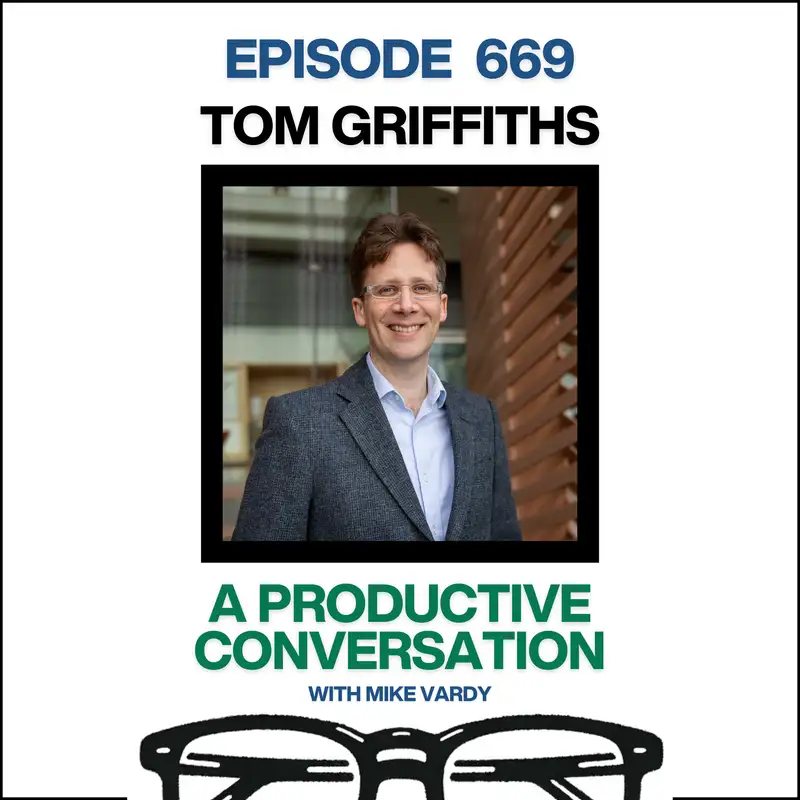 Episode 669